
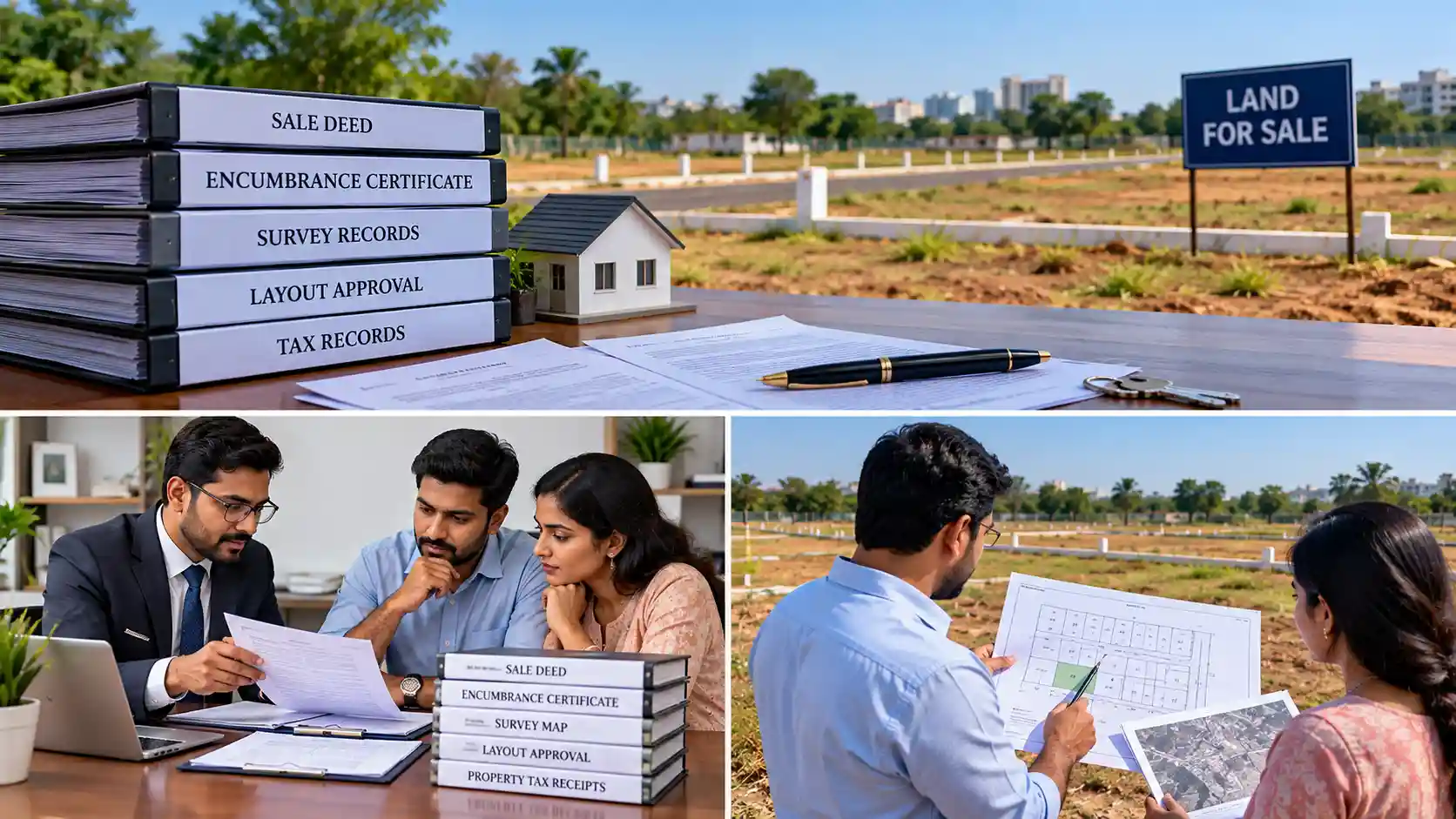
Understanding the documents to verify before buying land is one of the most important parts of a property purchase.
A plot may look attractive, the location may suit your needs, and the price may seem reasonable. But before paying an advance or signing an agreement, you should understand whether the available property records are clear and consistent.
Land transactions can involve several documents related to ownership, survey details, approvals, taxes and previous transactions.
The exact documents required can vary by location, property type and transaction, so professional verification is always useful.
This guide explains some of the common documents buyers should review before purchasing land.
1. Sale Deed: One of the Main Documents to Verify Before Buying Land
The sale deed is one of the key documents connected with property ownership.
It generally records a transfer of property from one owner to another.
When reviewing a sale deed, check basic details such as:
- Name of the owner
- Property description
- Survey number
- Plot number, where applicable
- Boundaries
- Registration details
- Date of transaction
The information in the deed should match the land you are considering.
Do not depend only on verbal confirmation about ownership.
If you are unsure about any part of the document, get it reviewed by an appropriate legal professional.
2. Previous Ownership Documents
When buying land, it is useful to understand how the property reached the current owner.
Ask for earlier title documents where relevant.
These may help you understand:
- Previous owners
- Earlier transfers
- Changes in ownership
- Whether the ownership chain appears consistent
The goal is to understand the history of the property, not just the current seller.
If there are gaps or unclear transfers, ask for clarification before proceeding.
3. Encumbrance Certificate
An Encumbrance Certificate, often called an EC, is commonly checked during land documents verification.
It may show certain registered transactions connected with the property during a specified period.
Depending on the records available, this can include information related to:
- Registered sales
- Mortgages
- Charges
- Other recorded transactions
Check whether the property details in the EC match the land you are planning to buy.
Do not assume an EC alone proves everything about a property.
It should usually be considered together with other ownership and property records.
4. Survey Number and Survey Records
The survey number is an important identifier for land.
When comparing the documents to verify before buying land, make sure survey information is consistent across available records.
You may compare the survey number in:
- Sale deed
- Layout documents
- Land records
- Tax-related records
- Site plan
- Other official documents
A mismatch should be understood before you move ahead.
The property shown on paper should correspond with the land you are actually visiting.
5. Layout Approval Documents
If you are purchasing a plot in a layout, ask whether the layout has the required approval.
Do not rely only on phrases such as:
“Approved Layout”
Ask for supporting information, such as:
- Name of approving authority
- Approval number
- Approved layout copy
- Plot number
- Road details
- Measurements
The approval should relate to the actual layout in which your plot is located.
Marketing material is not a substitute for an approval document.
6. Land Use or Conversion Records
Not every piece of land can automatically be used for every purpose.
Before buying, understand the permitted use of the property.
For example, land may be intended or classified for:
- Residential use
- Agricultural use
- Commercial use
- Other development purposes
If you plan to build a house, verify whether the property is suitable for residential use under the applicable rules.
Do not assume that every vacant plot can automatically be used for construction.
7. Tax and Revenue Records
Tax-related and revenue records can provide additional supporting information about a property.
Depending on the location and type of land, buyers may review records relating to:
- Property tax
- Land revenue
- Local authority records
- Mutation or related entries
- Other applicable dues
These records should be compared with the seller’s information and other property documents.
One document should not be viewed in isolation.
The overall record should make sense when the documents are reviewed together.
8. Identity of the Seller
The seller’s identity should match the ownership information.
Check details such as:
- Seller name
- Identity proof
- Name in ownership records
- Signature details where relevant
If the person dealing with you is not the registered owner, understand why.
They may be acting through:
- Power of Attorney
- Legal representative
- Authorised agent
In those situations, additional verification may be necessary.
9. Power of Attorney Documents
Sometimes a property may be handled by someone acting under a Power of Attorney.
If this applies, review:
- Who issued it
- Who received it
- What authority it gives
- Whether it covers the specific property
- Whether it allows the proposed transaction
Do not assume that every Power of Attorney automatically allows the holder to sell the property.
Professional legal verification is especially useful in these cases.
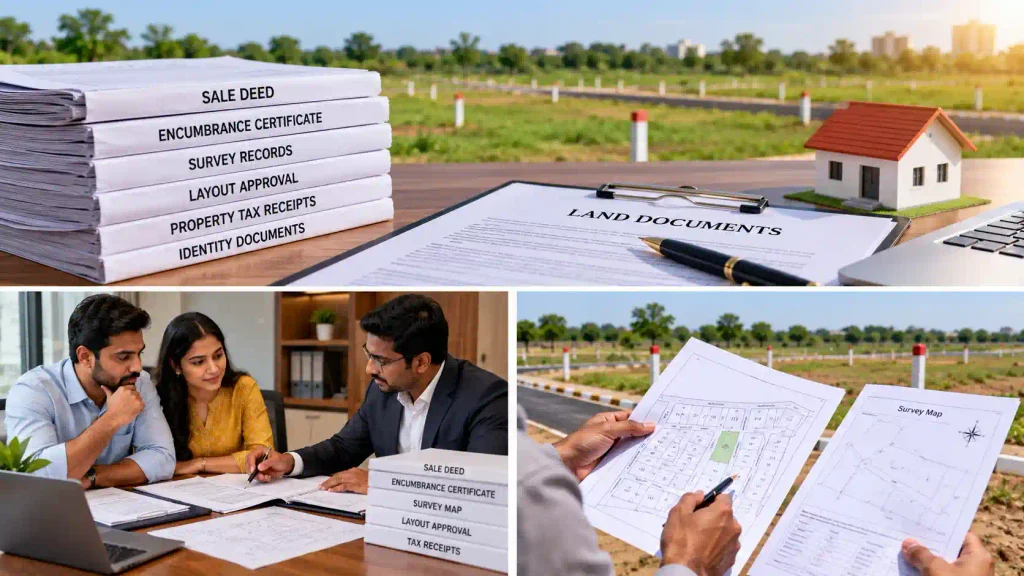
10. Property Boundary and Measurement Records
Property documents should match the actual land.
Compare:
- Plot dimensions
- Boundaries
- Road-facing side
- Adjacent properties
- Survey information
If necessary, a qualified surveyor can help identify the boundaries and measurements on the ground.
The land you visit should match the property described in the documents.
This is particularly important when boundaries are not clearly marked.
11. Road Access and Layout Plan
Road access should also be checked through the available layout or property records.
Ask:
- Is there an existing access road?
- Is the road shown in the approved layout?
- What width is indicated?
- Does your plot directly connect to it?
- Is the road existing or proposed?
A road shown on a promotional map may not always represent the current site condition.
Compare the paperwork with what you see at the property.
12. RERA Information, Where Applicable
Depending on the type and size of the development, some projects may come under applicable real estate regulation.
Where relevant, buyers can check project information through official regulatory sources.
For Andhra Pradesh, you can refer to the Andhra Pradesh Real Estate Regulatory Authority.
If someone says a project is registered, verify the details through the official source where possible.
Regulatory information should support your due diligence, not replace legal verification of the specific property.
Documents to Verify Before Buying Land: Quick Checklist
Before moving ahead with a purchase, review the following where applicable:
- ✅ Sale deed
- ✅ Previous title documents
- ✅ Encumbrance Certificate
- ✅ Survey number
- ✅ Survey records
- ✅ Layout approval
- ✅ Land-use records
- ✅ Tax records
- ✅ Revenue records
- ✅ Seller identity
- ✅ Power of Attorney, if applicable
- ✅ Site plan
- ✅ Boundary details
- ✅ Road access information
- ✅ Applicable RERA information
The exact checklist may differ depending on the property.
Use this as a starting point, not as a substitute for professional legal advice.
How to Compare Land Documents Properly
Simply collecting documents is not enough.
Compare the details across different records.
For example:
| Detail | What to Compare |
|---|---|
| Owner Name | Sale deed, ID, supporting records |
| Survey Number | Sale deed, layout, land records |
| Plot Number | Layout and sale records |
| Dimensions | Site plan and physical site |
| Road Access | Layout and actual property |
| Approval | Approval document and authority |
If the same property detail appears differently across documents, ask why.
Small differences may have an explanation, but they should still be understood before you purchase.
When Should You Verify the Documents?
Ideally, document verification should happen before you make a major financial commitment.
Before paying a large advance, try to understand:
- Who owns the land
- Which documents are available
- Whether the plot matches those documents
- Whether the layout is approved, where applicable
- Whether land use matches your purpose
- What additional checks are required
Do not let pressure or urgency replace basic verification.
Documents to Verify Before Buying Land With a Lawyer
Property documents can be difficult to interpret if you are not familiar with legal records.
A qualified property lawyer can help review:
- Ownership history
- Title documents
- Encumbrances
- Sale deeds
- Approval records
- Power of Attorney documents
- Other property-specific concerns
Independent verification is particularly useful when:
- Ownership history is complicated
- Documents have different names or numbers
- The seller is acting through another person
- The property has changed hands several times
- You are unsure about approvals or land use
Professional advice can help you understand questions that a simple checklist may not answer.
Common Mistakes Buyers Should Avoid
Avoid these common mistakes:
- Checking only one document
- Depending only on the seller’s explanation
- Paying an advance before basic verification
- Ignoring survey details
- Not checking previous ownership
- Accepting “approved layout” claims without proof
- Ignoring land-use restrictions
- Not matching documents with the physical site
- Skipping professional legal review where needed
A property may look simple on the ground while the paperwork is more complicated.
Final Thoughts: Documents to Verify Before Buying Land
Knowing the documents to verify before buying land can help you approach a property purchase more carefully.
Do not focus only on:
- Price
- Location
- Plot size
- Appearance
Also understand the legal and property records connected with the land.
Check ownership, survey details, approval information, land use, road access and other relevant records before making a major commitment.
At UniqNest, you can explore different property options based on location, property type and budget.
You can explore property options, contact UniqNest or visit the UniqNest homepage.
You can also read:
- Open Plots in Vijayawada: Buyer’s Guide
- Open Plots vs Apartments
- Best Locations to Buy Property in Hyderabad
Check the land. Check the documents. Understand both before you decide.
Disclaimer: This article is for general informational purposes only and does not constitute legal, financial or investment advice. Property documentation requirements can vary by location, property type and transaction. Buyers should obtain appropriate professional advice and independently verify all records before purchasing.